

Told your panel may not handle an EV charger? How an electrician decides between a lower charger setting, a load-management device and a bigger service.
You just brought home an electric car, or you are about to, and someone has already said it: "Your panel might not handle a charger." Maybe it was the dealer, maybe a neighbor, maybe an earlier electrician who glanced at the basement and shook his head. In an older house in Valley Stream, Lynbrook, Elmont or anywhere else in the Town of Hempstead, that comment is common, and it leaves you wondering whether you are looking at a new service or something simpler.
Whether you need an EV charger panel upgrade comes down to what your house already draws. A 100-amp house with gas heat and a gas range is a different case from one with central air, an electric dryer and an electric range. Here is how an electrician works it out, and the three answers you can get.
Why the panel comes up at all
A Level 2 charger is not like a toaster that runs for two minutes. It pulls a steady load for hours, usually overnight. New York's current state code, the 2025 Uniform Code published by the New York Department of State, references the 2023 National Electrical Code (NFPA 70-2023). That code treats EV charging as a continuous load (NEC 625.42).
Because of that, the circuit is sized above the charger's own rating, at 125 percent of its load. A charger that draws 48 amps needs a circuit of at least 60 amps.
If your house still has a 100-amp service and also runs central air, an electric dryer or an electric range, that long, steady draw can be more than the service has to spare. That is the whole reason the panel question comes up. If you are still sorting out what Level 1 and Level 2 mean for your car, our post on EV charging levels and speeds covers it.
What an electrician checks first
Before anyone says "upgrade" or "you're fine," there is a short list to look at:
- Service size — the main breaker and the meter tell you what the house is fed with.
- Panel condition — signs of heat, corrosion, or a panel that needs replacing on its own merits.
- Open breaker spaces — whether there is physically room for a new two-pole breaker.
- The big loads already in the house — central air, a heat pump, an electric range or dryer, a pool or hot tub, a well pump.
- The run to the car — how far it is from the panel to where you park.
Then comes a load calculation. For an existing house, the code allows a shortcut method for adding new load (NEC 220.83), so the electrician does not have to start from scratch. Under NEC 220.57 in the 2023 code, the charger counts in that calculation at 7,200 volt-amps or its nameplate rating, whichever is larger. You do not need to follow the math. What matters is that the answer comes from the numbers in your house, not a rule of thumb. That assessment is the first step of our Level 2 EV charger installation.
The three answers you can get
After the walk-through and the calculation, you will hear one of three things:
- It fits as is. The service has room. You need a dedicated car charger circuit and the charger, and that is the job.
- It fits if the charger's draw is limited. Either the charger is set to a lower amperage, or a load-management device holds it back when the house is busy.
- It needs a bigger service. The house is already close to its limit, or there are other reasons a new service makes sense.
The next three sections walk through each of these options.
Option 1: Set the charger to a lower amperage
Many Level 2 chargers have an adjustable current setting. NEC 625.42(B) lets an electrician size the circuit and the load calculation to that lower setting, as long as two conditions in that section are met: access to the adjustment is restricted, and the adjusted rating is shown on a durable label.
The trade-off is slower charging. For a lot of daily driving, an overnight charge at a lower rate may still cover what you use, but that depends on your car and your commute. Our charging levels post explains what charging speed means in practice.
This option works best when the load calculation comes out close, the panel is in good shape and has room for the breaker, and nobody in the house needs a fast top-up during the day.
Option 2: EV charger load management
No Shorts offers a load-management device for exactly this situation. The device watches the home's total load and holds the charger back when the house is busy, so the service is never pushed past what it can carry. When the dryer, range and air conditioning are running together, the charger slows down. When they shut off, the charger picks back up.
The code allows for this. Under NEC 625.42(A), read with 750.30 and 220.70, when an energy management system limits the charger, the load calculation uses the maximum current the system will allow, not the charger's full rating. The system has to prevent overloads, has to stop current if it malfunctions, and has to be marked in the field with its maximum setting and the date it was set.
What load management does not do:
- It does not fix a panel that is worn out or due for replacement.
- It does not add breaker spaces to a panel that is full.
- It does not make charging faster. On a busy evening, it makes it slower.
If your panel is sound and has room, and the calculation shows the service can carry the charger when the rest of the house is quiet, load management is often the practical answer.
Option 3: An EV charger panel upgrade
Sometimes a bigger service is the better answer, not the fallback. It usually makes sense when:
- A second EV is on the way.
- A heat pump, an addition or a finished basement is planned.
- The panel has no open spaces.
- The panel needs replacing anyway because of its age or condition.
Our 200-amp service upgrade includes a new 200-amp main breaker panel, new breakers, a 200-amp lever-bypass meter socket, a 2-inch PVC rigid riser, 2/0 copper service wire, grounding, and testing when the work is done. For larger homes, an accessory dwelling unit, more than one EV charger or heavy renovation loads, there is also a 320-amp service upgrade.
A service upgrade involves the utility as well as the town or village. If you want to see how PSEG Long Island, the permit and the inspection fit together, we laid it out in PSEG Long Island service upgrade: who does what.
Permit and inspection, whichever path you take
A new charger circuit, a load-management device and a service upgrade are all permit work. For EV chargers, we pull the electrical permit and coordinate the rough and final inspection, as our car charger permitting page describes.
Where the code references come from
The rules quoted above come from these sources, so you or your electrician can check them:
- Code in force in New York — the New York Department of State's 2025 Uniform Code, whose referenced standards list NFPA 70-2023, the 2023 National Electrical Code.
- Continuous load and adjustable chargers (NEC 625.42 and 625.42(B)) — the 2023 NEC text as reproduced in Leviton's Captain Code 2023 guide.
- Energy management systems (NEC 625.42(A), 750.30, 220.70) — Leviton's Captain Code 2023 guide and NECA's Code Question of the Day for October 24, 2023.
- How a charger counts in a load calculation (NEC 220.57) — Eaton's guide to the 2023 NEC and home electrification.
- Adding load to an existing house (NEC 220.83) — the 2023 NEC optional calculation for existing dwellings.
Your town or village inspector has the final word on how the code applies to your house.
What to send the office for a faster answer
You can save a round of back-and-forth by sending a few photos and details when you reach out:
- A photo of the panel with the door open, showing the breakers and the label inside the door.
- A close photo of the main breaker.
- A photo of the electric meter.
- A photo of where the car parks and the route from the panel to that spot.
- The charger make and its maximum amps, or your car's onboard charger rating if you have not picked a charger yet.
- A list of the big appliances in the house: central air, heat pump, electric range or dryer, pool, hot tub, well pump.
Those details are what the load calculation and the three answers above are built on, so sending them up front saves a round of questions. You can also read more about electric car charger installation in Nassau County.
Need a licensed electrician on Long Island? Call (516) 915-1234 for a straight answer and a written estimate, or request one online.
Need a licensed electrician on Long Island?
Call (516) 915-1234 for a straight answer and a written estimate, or request one online.
Request an estimateMore from the blog
Breaker Keeps Tripping? What It Means and When to Call
A breaker that trips again and again is telling you something. Here is how to tell an overload from a short, a ground fault or a worn breaker, what you can safely check, and when to call an electrician.
Read morePSEG Service Upgrade: Who Does What, Step by Step
Once you know your home needs a bigger electric service, here is what happens next on Long Island: the estimate, the permit, the PSEG Long Island request, work day and the certificate.
Read more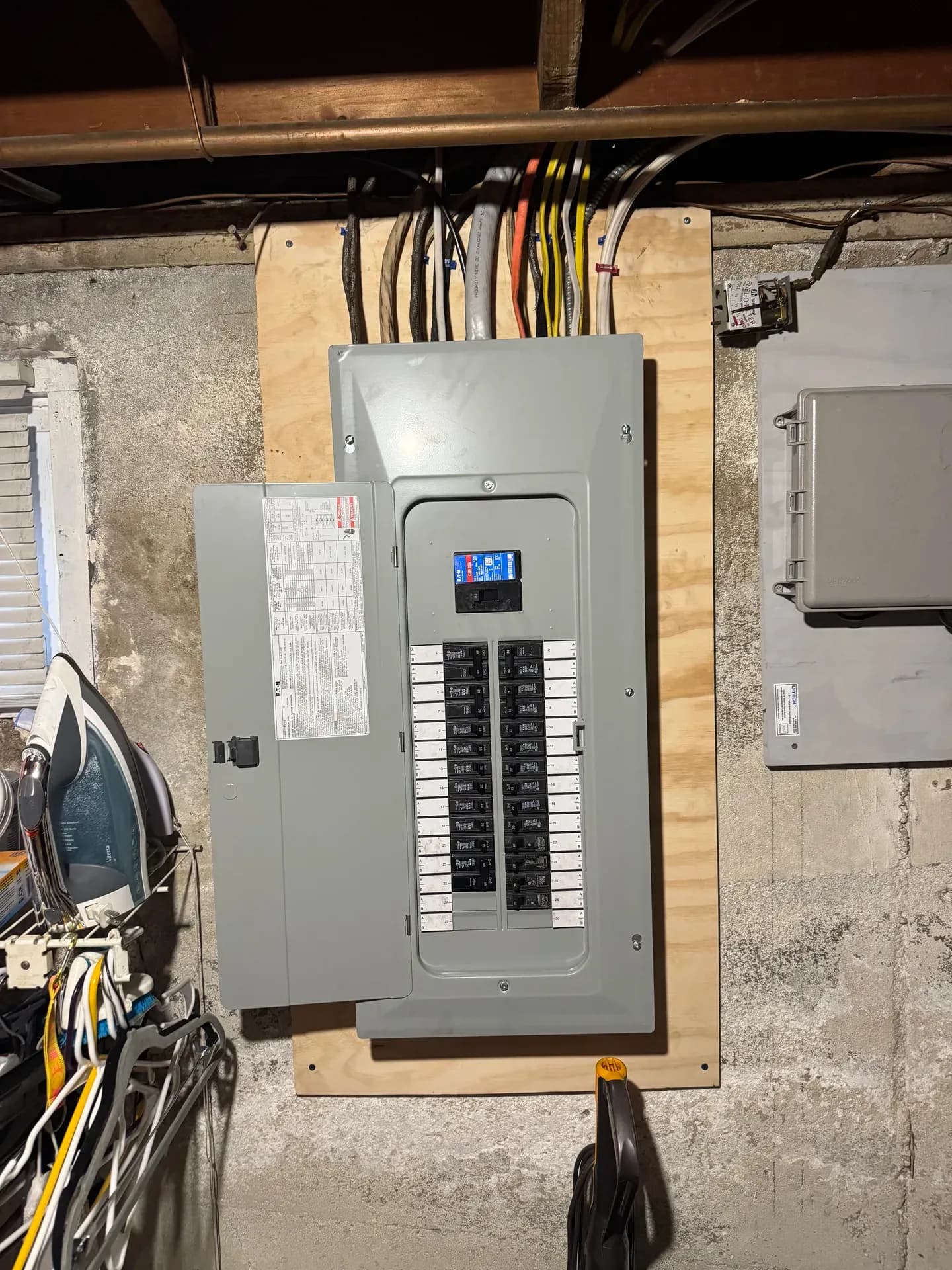
The Complete Guide to Electric Service Upgrades: Is Your Home Ready for Modern Power Demands?
Choosing a generator for your home can be tough because there are so many factors to consider. Here are a few things to think about when shopping.
Read more